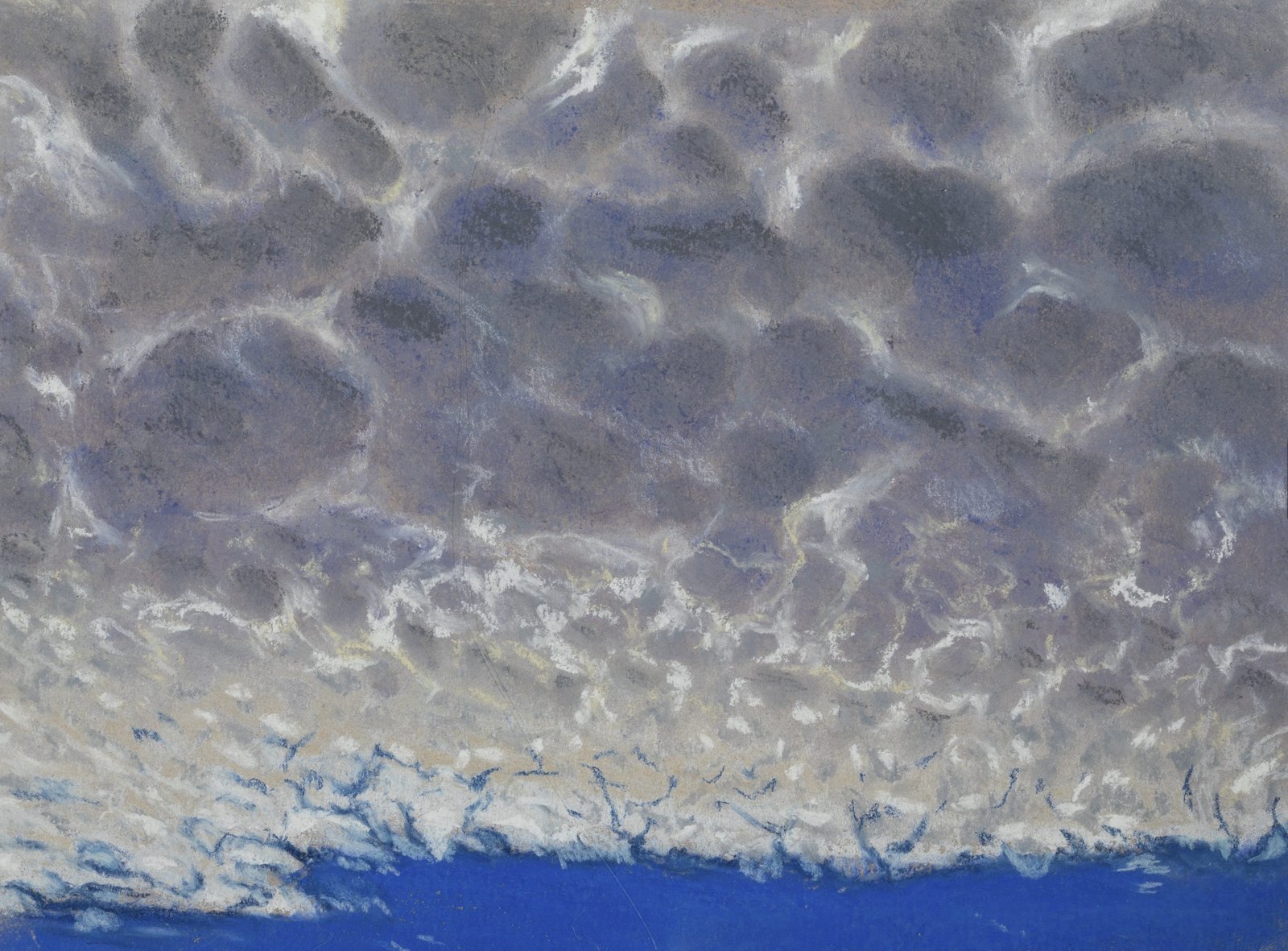
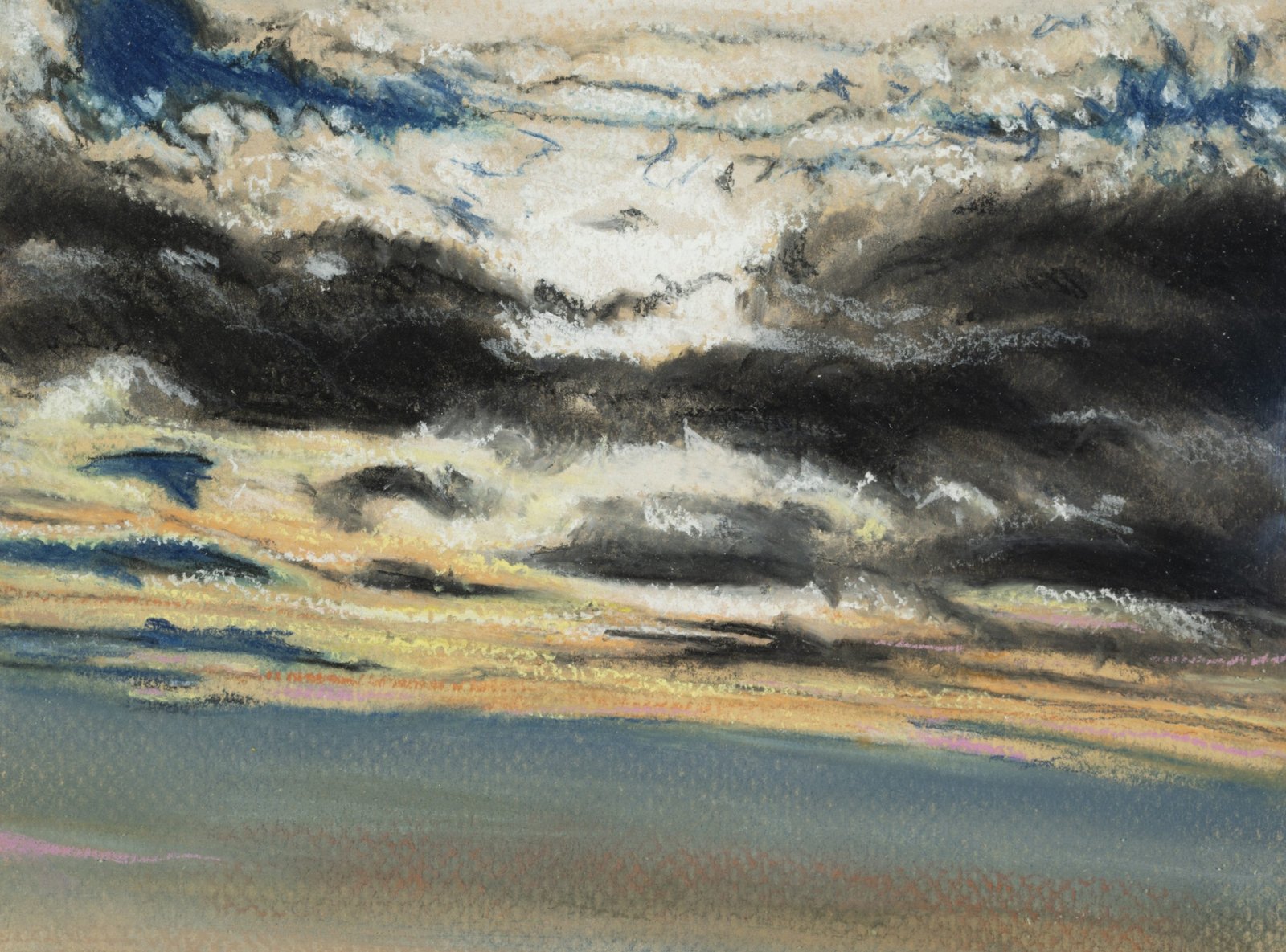
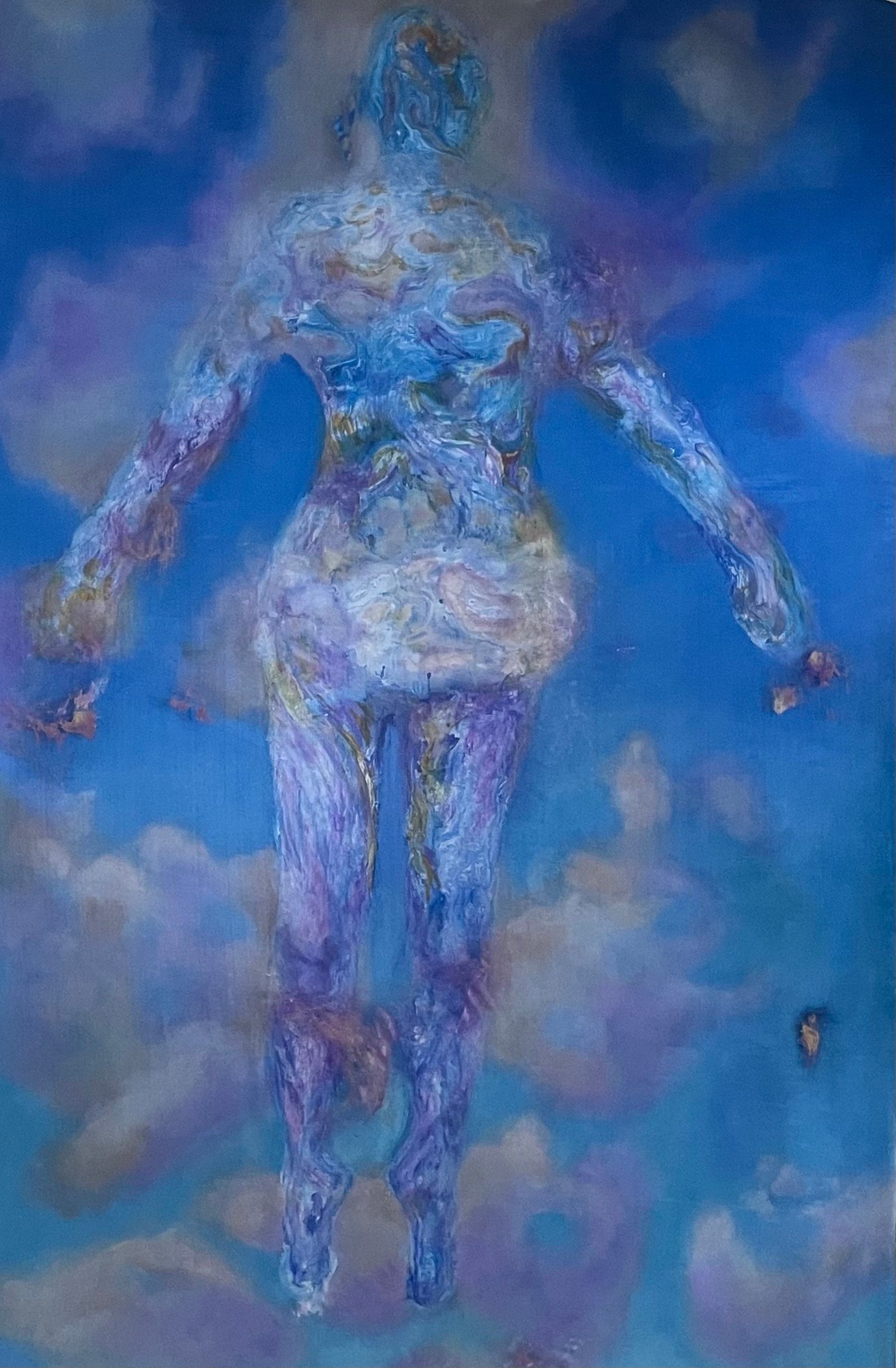
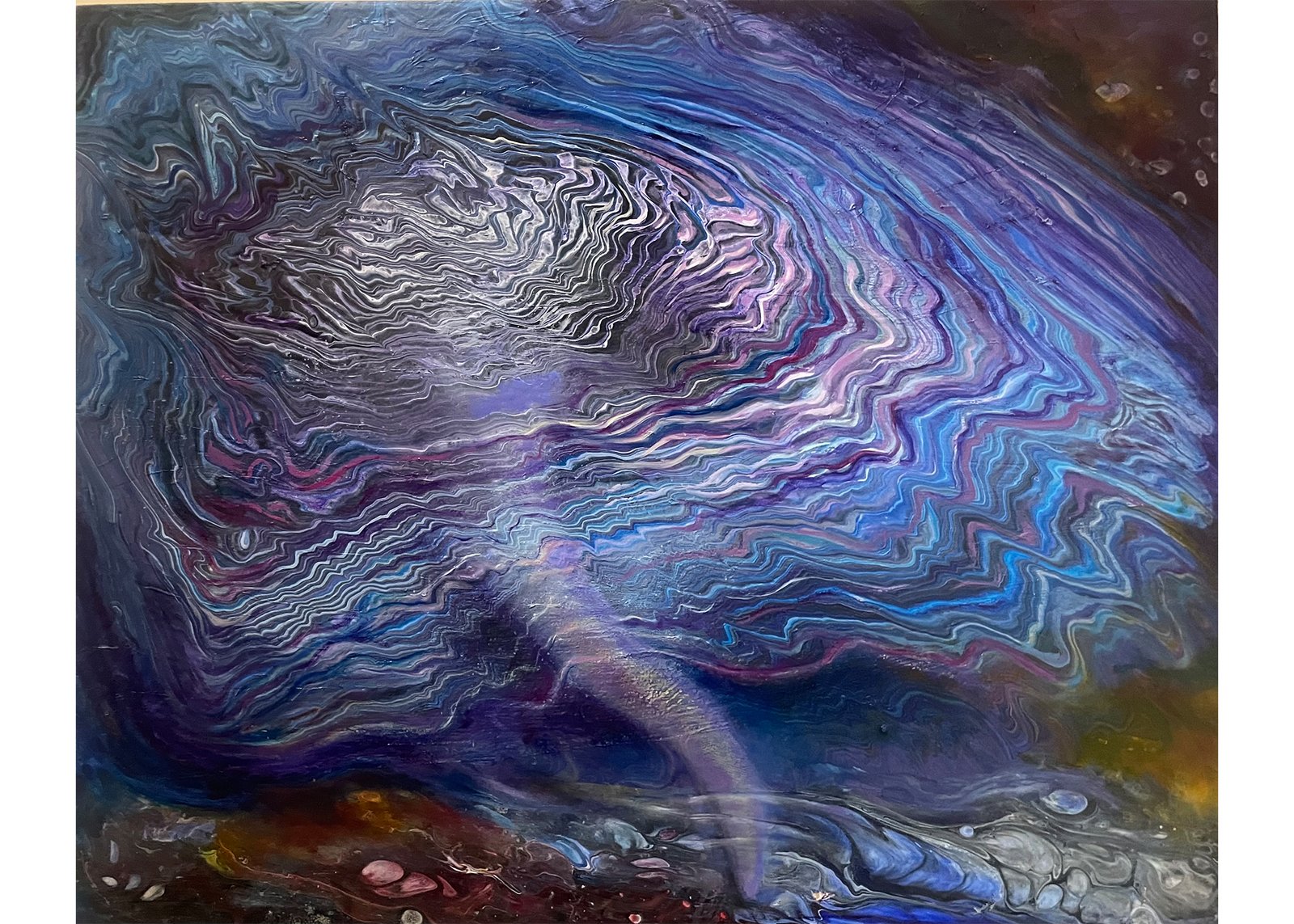
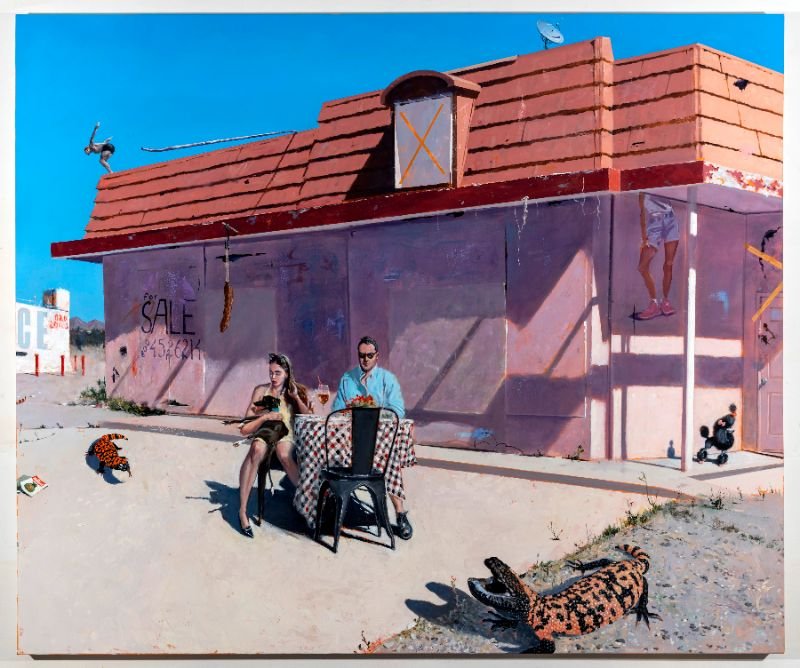
My newest body of work was created in collaboration with Nobel Laureate Frank Wilczek, whose work in color perception inspired the art, Professor Nathan Newman, Professor Dan Marshall, and the rest of the Arizona State University SciHub team*, and realized with their device, the Hylighter, that has…My newest body of work was created in collaboration with Nobel Laureate Frank Wilczek, whose work in color perception inspired the art, Professor Nathan Newman, Professor Dan Marshall, and the rest of the Arizona State University SciHub team*, and realized with their device, the Hylighter, that has ten programmable monochromatic lights. The work invites viewers to consider that there is no single authority for an image. Rather, meaning resides in the oscillation between light, object and viewer—and in the recognition that color is not unique, never fixed, never complete, nor shared. Under the HyLighter’s ten monochromatic beams, vision becomes an event: contingent, relational, and inherently plural. Color appears not as a stable category but as a fleeting alignment between the luminous and the observer—neither entirely “out there” nor solely “in here,” but at most the unstable interplay of illumination and perception. The paintings explore how every creature lives in a world shaped by what it perceives. A tiger whose orange melts seamlessly into the grassland; the near-invisible shimmer of a tuna slipping through water; deep-sea reds that glow for some but not others; the riotous sensorium of a mantis shrimp with its spectroscopic vision; the nearly monochrome realm of whales and dolphins; the unlike floral beacons of hummingbirds and bees. Everywhere, for all species, light, perception, and uncertainty are inseparable. Vision is not even the same for all humans. Color blind persons have a cone spectrally—shifted resulting in a different view on color—for instance, reds and greens may be indistinguishable for them—but they can discern subtle variations in light and pattern that others overlook. In rarer and more severe forms, one or more cones may be missing entirely, reshaping the very fabric of color experience. Ten round paintings reimagine the "Ishihara Plates" (a test for colorblindness), revealing a visual advantage of color blindness—a heightened ability to guage levels of luminosity and to recognize patterns. Yet the work is less about animals, optics, or technique than about appearance itself. It stages a philosophical humility: an acknowledgment that our world is not the measure of the real but merely one aperture among many. The paintings meditate on the limits of human access and on the abundance that flourishes beyond our assumption of perceptual sovereignty.